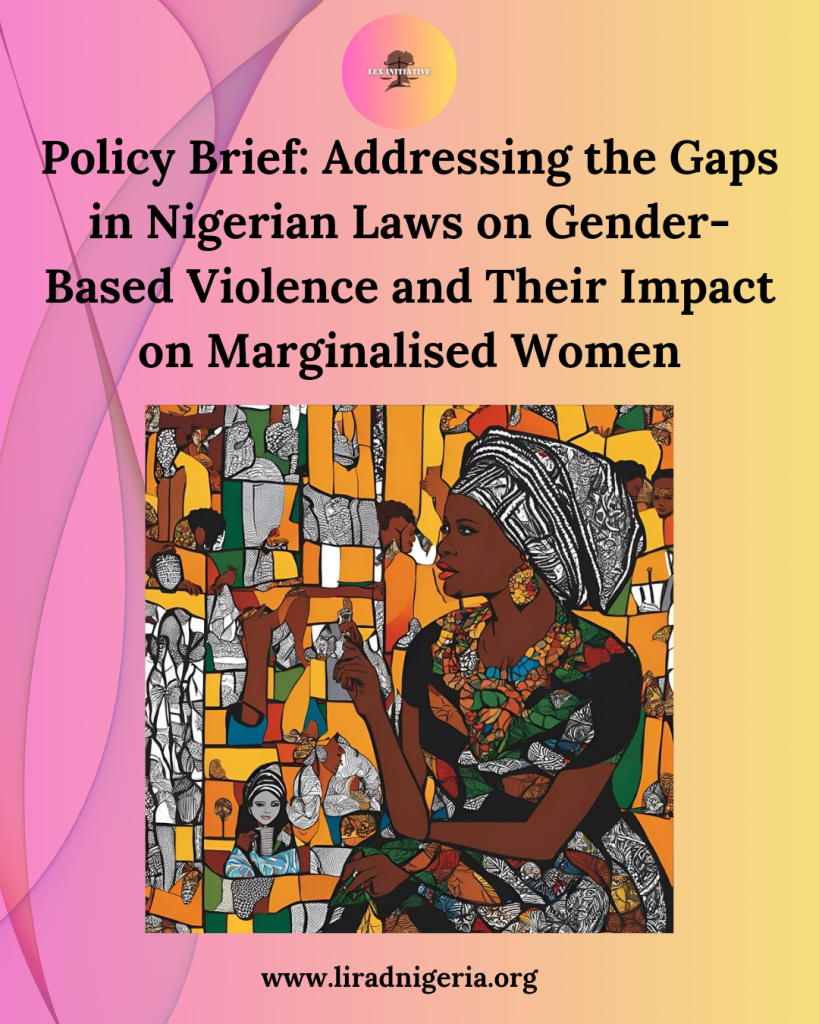

The theme for this year’s International Day of Persons with Disabilities, “Amplifying the Leadership of Persons with Disabilities for an Inclusive and Sustainable Future,” is a powerful call to action. It underscores the pivotal role individuals with disabilities, particularly women, must play in creating a just and equitable world. Yet, for women with disabilities, stepping into leadership often involves navigating systemic challenges—chief among them, pervasive violence, societal neglect, and gaps in legal protections.
Globally and in Nigeria, women with disabilities face disproportionate risks of violence, compounded by systemic barriers that limit their access to justice, support, and opportunities to lead. As we commemorate this important day, it is essential to centre their voices, elevate their leadership, and dismantle the barriers preventing them from thriving as agents of change.
A Global Epidemic of Violence
Violence against women remains a global epidemic, but women with disabilities face uniquely severe risks. According to the World Health Organisation, women with disabilities are up to three times more likely to experience physical, sexual, or psychological abuse than their non-disabled peers. This violence is often perpetrated by those they depend on—family members, caregivers, or intimate partners—making escape even more difficult.
In Nigeria, the statistics are alarming. A 2021 study revealed that nearly 68% of women with disabilities reported experiencing violence in their lifetimes. This is exacerbated by systemic failures that hinder their access to justice.
For Chika, a Nigerian woman with a mobility impairment and a survivor of domestic violence, the challenge was not only escaping her abuser but also navigating inaccessible reporting mechanisms. “I was trapped—not just by my abuser, but by a system that didn’t know how to hear me,” she said. Chika’s story is emblematic of the experiences of countless women with disabilities who are left vulnerable by both societal attitudes and institutional neglect.
Policy Frameworks: The Disability Act and the VAPP Act
Nigeria has made significant strides in addressing discrimination and gender-based violence through its legal frameworks. The Discrimination Against Persons with Disabilities (Prohibition) Act (2019) and the Violence Against Persons (Prohibition) Act (2015) are two landmark legislations designed to protect vulnerable groups. However, both Acts fall short of addressing the unique intersectional challenges faced by women with disabilities.
The Disability Act
The Disability Act prohibits discrimination against persons with disabilities and mandates accessibility in public spaces, transportation, and workplaces. It also established the National Commission for Persons with Disabilities (NCPWD) to oversee implementation. However, the Act does not explicitly address gender-based violence or the specific vulnerabilities of women with disabilities.
While the Act requires accessible public spaces, this provision is often poorly implemented, leaving police stations, courts, and shelters inaccessible to women with disabilities who need to report abuse. Moreover, the Act fails to integrate with gender-focused legislation like the VAPP Act, creating gaps in protections and support systems.
The VAPP Act
The VAPP Act is Nigeria’s most comprehensive legislation on gender-based violence, addressing issues such as domestic violence, rape, and harmful traditional practices. However, it does not include specific provisions for women with disabilities, whose experiences of violence often differ significantly from those of other women.
For instance, women with disabilities are more likely to experience abuse from caregivers or intimate partners who exploit their dependency. They also face additional barriers to accessing justice, such as a lack of sign language interpreters or Braille materials in legal settings.
Bridging the Gaps: Recommendations for Legal Reform
To address the shortcomings of the Disability Act and the VAPP Act, and to ensure that women with disabilities are fully protected and empowered, the following steps are essential:
1. Amend the Disability Act: Incorporate provisions that specifically address gender-based violence, including mandatory protections for women with disabilities in abusive situations.
2. Integrate the Disability and VAPP Acts: Harmonise the two laws to ensure comprehensive protections that address both disability-related and gender-based vulnerabilities.
3. Strengthen Accessibility: Make reporting mechanisms, shelters, and judicial services fully accessible through ramps, sign language interpreters, Braille materials, and digital platforms.
4. Raise Awareness: Launch public education campaigns to combat stigma and increase awareness of the rights of women with disabilities under both Acts.
5. Support Grassroots Advocacy: Empower organisations like the Lex Initiative for Rights Advocacy and Development (LIRAD) to train women with disabilities as advocates and leaders in their communities.
Stories of Leadership and Resilience
Despite these systemic challenges, women with disabilities in Nigeria have demonstrated remarkable resilience and leadership. Through their advocacy and courage, they are challenging societal norms and inspiring transformative change.
Fatima, a Nigerian woman with a hearing impairment, was empowered through LIRAD’s training to establish a local support group for survivors of violence. “For the first time, I felt seen and heard,” she shared. “Now, I’m helping other women understand their rights and how to demand them.”
Globally, similar movements are taking shape. Initiatives like the UN Women Disability Inclusion Strategy are empowering women with disabilities to take on leadership roles in policy advocacy and community engagement. These efforts underscore that women with disabilities are not just survivors—they are leaders, changemakers, and architects of a more inclusive future.
A Call to Action
As we commemorate this year’s International Day of Persons with Disabilities, the theme challenges us to move beyond reflection to meaningful action. By addressing the systemic barriers embedded in Nigeria’s legal and social frameworks, we can create a society where women with disabilities are no longer silenced but are empowered to lead and thrive.
This requires a collective effort:
• Governments must amend and harmonise laws like the Disability Act and VAPP Act to ensure comprehensive protections.
• Civil society organisations must amplify the voices of women with disabilities, empowering them to take on leadership roles.
• Communities must confront and dismantle harmful stereotypes, fostering inclusion and respect for all.
Conclusion
The stories of women like Chika and Fatima remind us that the fight for justice and inclusion is far from over. Their journeys from silence to strength are a testament to the transformative power of leadership and advocacy.
At Lex Initiative, we remain steadfast in our commitment to empowering women with disabilities and advocating for systemic change. Together, we can create a future where their voices are not only heard but lead the way towards a more inclusive, equitable, and sustainable world.
What role will you play in this movement for justice and equality?