Skip to content

Call Us

+234 (0) 8142427740

Email

info@liradnigeria.org

Lex Initiative for Rights Advocacy and Development (LIRAD)
donate now
  • Home
  • About Us
  • News

      All News

      Blog

      Annual Report

  • Programs
  • Gallery
  • Contact Us
  • Home
  • About Us
  • News

      All News

      Blog

      Annual Report

  • Programs
  • Gallery
  • Contact Us
×

Yaakugh Augusta

Home
Yaakugh Augusta

Beyond Legal Bans: The Imperative of Community Engagement to End FGM

By Augusta Shahin, Esq. and Uduakobong Okon, Esq.


Introduction

Every year, on 6th February, the world marks the International Day of Zero Tolerance for Female Genital Mutilation (FGM), a stark reminder of the millions of girls and women affected by this harmful practice. The theme for this year, “Stepping up the Pace: Strengthening Alliances and Building Movements to End FGM,” emphasises the urgent need for collaborative, community-driven approaches to eradicate FGM by 2030.

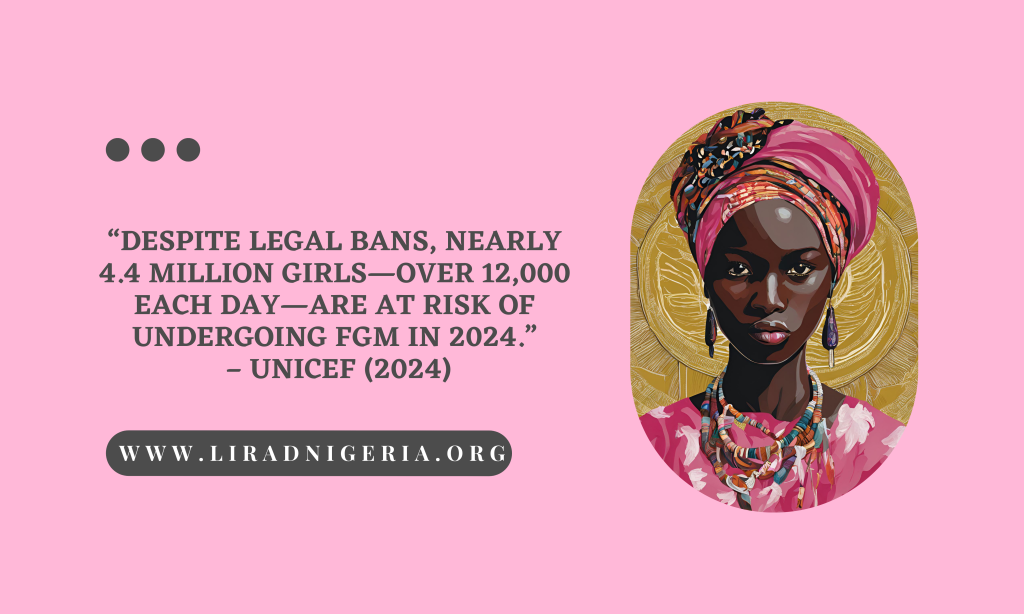
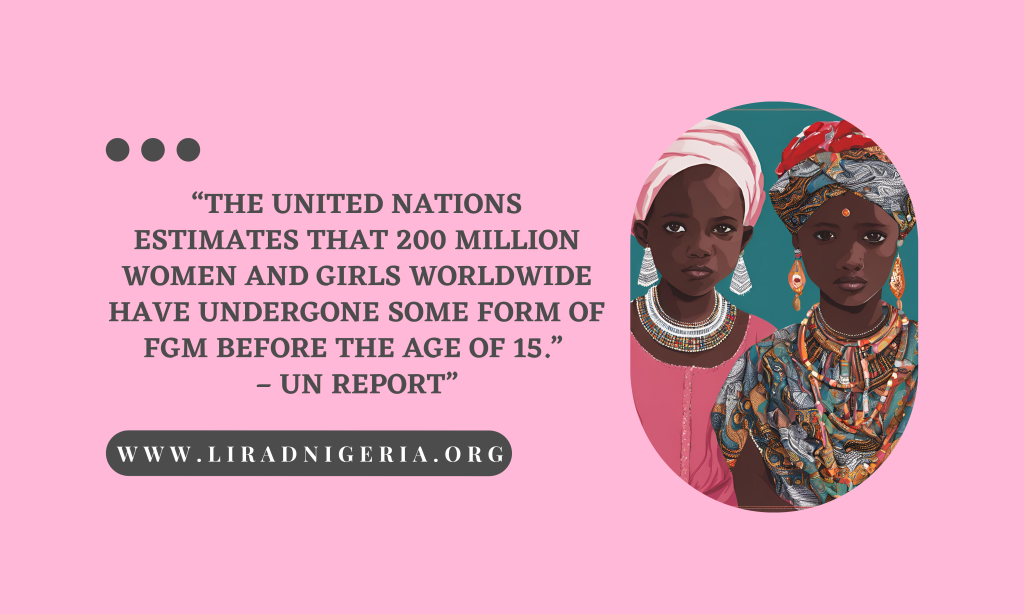
FGM is an extreme violation of human rights. It provides no health benefits and instead results in severe physical, psychological, and reproductive health complications. Although legal bans exist in many countries, they have not been sufficient in eliminating the practice. According to UNICEF (2024), nearly 4.4 million girls—over 12,000 each day—are at risk of undergoing FGM this year alone. Additionally, the United Nations estimates that 200 million women and girls worldwide have undergone some form of FGM before the age of 15.

This article will examine why existing legal frameworks have fallen short in stopping FGM and explore holistic solutions that combine stronger enforcement, grassroots activism, and community-driven interventions.

The Legal Landscape: Progress and Gaps

A. Laws Against FGM: What Exists?

FGM, also known as female genital cutting (FGC) or female circumcision, refers to the partial or total removal of external female genitalia for non-medical reasons. The World Health Organization (WHO) classifies FGM into four categories:

  • Type I (Clitoridectomy) – Partial or total removal of the clitoral glans.
  • Type II (Excision) – Removal of the clitoral glans and labia minora, with or without the labia majora.
  • Type III (Infibulation) – Narrowing of the vaginal opening by repositioning the labia.
  • Type IV – Other harmful procedures, including pricking, piercing, incising, scraping, and cauterisation.

Globally, international human rights laws recognise FGM as a violation of fundamental rights. Some key frameworks include:

Convention on the Elimination of All Forms of Discrimination Against Women (CEDAW), 1979 – Calls for the elimination of harmful practices against women.
Convention on the Rights of the Child (CRC), 1989 – Mandates protection against all forms of violence.
International Covenant on Civil and Political Rights (ICCPR), 1966 – Protects individuals from torture and cruel treatment.
Maputo Protocol (2003) – A significant African treaty explicitly banning FGM.
United Nations Sustainable Development Goal 5.3 – Aims to eliminate all harmful practices, including FGM, by 2030.
B. Nigeria’s Legal Framework

In Nigeria, Edo State was the first to enact a law against FGM—the Edo State Female Circumcision (Prohibition) Law, 1999. This was followed by Cross River’s Girl-Child Marriages and Female Circumcision (Prohibition) Law (2000) and Ekiti State’s Female Circumcision (Prohibition) Law (2002). Several other states, including Lagos, Delta, Osun, and Ondo, have also criminalised the practice.

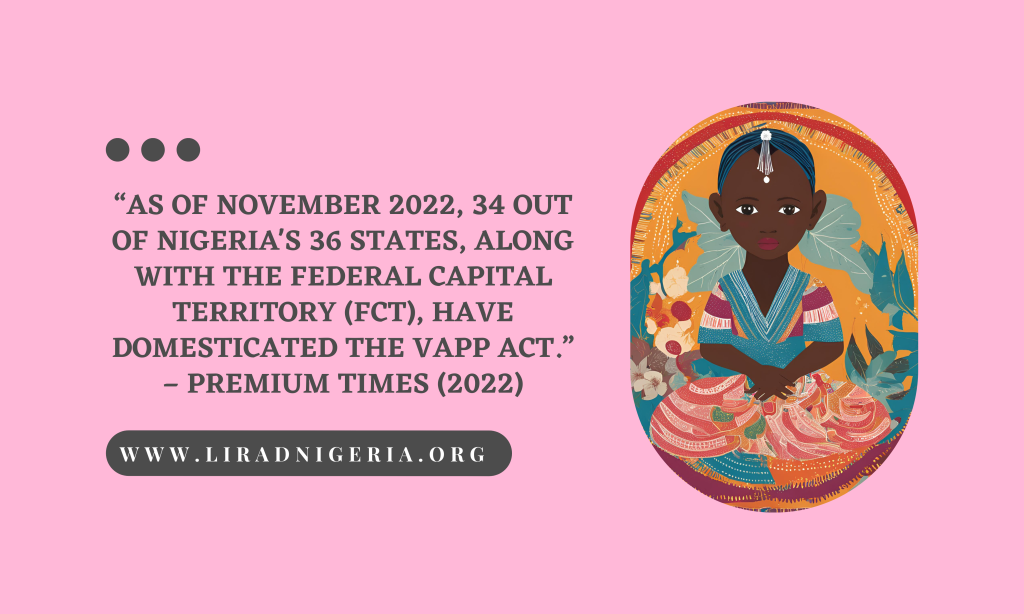
The most significant legal milestone was the Violence Against Persons (Prohibition) Act (VAPP), 2015, which explicitly criminalises FGM at the national level. As of November 2022, 34 out of Nigeria’s 36 states, along with the Federal Capital Territory (FCT), have domesticated the VAPP Act (Premium Times, 2022).

Why Legal Bans Are Not Enough

While laws are necessary, they do not automatically lead to cultural shifts. Several factors undermine the effectiveness of legal bans:

1. Slow Adoption and Weak Enforcement

Despite the widespread domestication of the VAPP Act, enforcement remains inconsistent. Many cases of FGM go unreported, and prosecutions are rare due to cultural resistance and weak judicial mechanisms.

Example: In Osun State, where FGM prevalence is 76.6%, law enforcement officers have received training on FGM, yet convictions remain low due to community silence and lack of reporting.
2. Lack of Public Awareness

Many individuals, including law enforcement officers and community members, do not know that FGM is illegal. A survey by the Society for the Improvement of Rural People (SIRP) in Enugu State found that:

❌ 95% of respondents had never heard of the VAPP Act.
✅ 90% supported its domestication once informed.
3. Cultural Resistance

FGM is entrenched in tradition. In many societies, it is considered a rite of passage or a prerequisite for marriage, making legal interventions alone insufficient.

Example: In Kenya, despite a strong legal framework, families cross into Tanzania and Uganda to have their daughters cut—highlighting the cross-border challenge of enforcement.

4. The Rise of Medicalised FGM

FGM is increasingly performed by healthcare professionals in private clinics. This creates a false perception of safety and makes legal enforcement more difficult.

Example: UNFPA (2023) reports that one in four cases of FGM is now medicalised, particularly in Egypt, Nigeria, and Sudan.


Beyond the Law: What More is Needed?

To end FGM, a holistic approach is essential, incorporating community engagement, education, and empowerment.

1. Community Engagement & Education
Solution: Work with traditional & religious leaders to shift cultural perceptions.
Success Story: In Senegal, the Tostan Program has helped over 9,000 communities abandon FGM by promoting human rights education and alternative rites of passage.

Solution: Conduct public awareness campaigns in local languages through radio, storytelling, and social media.

Success Story: In Ethiopia, radio programmes helped reduce FGM prevalence in some regions by over 30% (UNFPA, 2022).

2. Empowering Women & Girls

Solution: Education for girls – Keeping girls in school lowers FGM risk by reducing societal pressures.
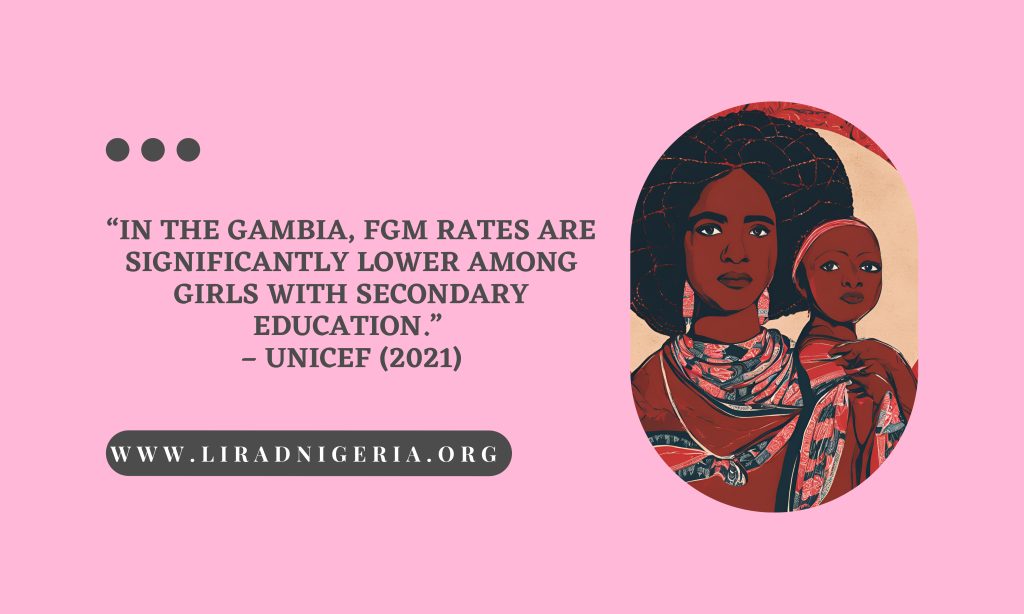
Evidence: In The Gambia, FGM rates are significantly lower among girls with secondary education (UNICEF, 2021).

Solution: Alternative livelihoods for traditional cutters – Many practitioners depend on FGM for income.
Success Story: In Burkina Faso, former FGM practitioners were retrained as birth attendants and entrepreneurs.

3. Strengthening Law Enforcement & Reporting Mechanisms

Solution: Mandatory training for law enforcement & judiciary to improve prosecution rates.
Solution: Community-based reporting hotlines to provide survivors with anonymous ways to report FGM cases.
Success Story: In Burkina Faso, government-funded FGM hotlines led to over 1,000 arrests since 2018.

Solution: Regulation of medical professionals – Stronger penalties for doctors performing FGM.
Example: Egypt (2021) introduced strict penalties for medicalised FGM, leading to a sharp decline in cases.

Conclusion: A Holistic Approach to Ending FGM

Key Takeaways:
Laws alone will not end FGM – enforcement must be consistent and community-driven.
Education and cultural change are key – people abandon harmful traditions when they understand the risks.
Empowered girls and women can resist FGM – education & economic independence are crucial.

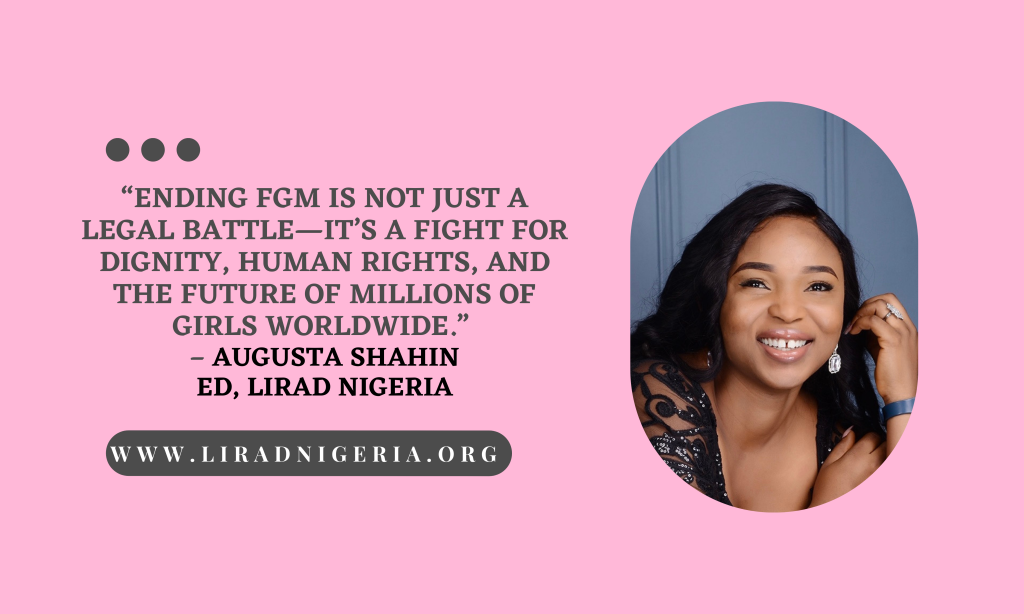
Ending FGM is not just a legal battle—it’s a fight for dignity, human rights, and the future of millions of girls worldwide. Will you be part of the change? #EndFGM #StopTheCut

Join our conversation on X space FGM and the
Law: Are Legal Bans Enough

BanFGM BreakTheSilence ChildProtection EducateToEndFGM EndFGM EndMedicalisedFGM EndViolenceAgainstWomen FGMFreeGeneration FGMIsViolence GenderEquality GirlsRightsMatter HealthNotHarm HumanRights JusticeForSurvivors LetGirlsGrow lex initiative lirad nigeria NoMoreFGM ProtectGirls SafeFutureForGirls SayNoToFGM SDG5 StopGenderBasedViolence StopTheCut WomenEmpowerment ZeroToleranceFGM

The U.S. Withdrawal from WHO: A Crisis in Global Health Governance and the Legal Implications for Marginalised Women in Nigeria

At Lex Initiative for Rights, Advocacy and Development (LIRAD), we are deeply concerned about the ripple effects of President Donald Trump’s decision to withdraw the United States from the World Health Organization (WHO). While the immediate consequences of this withdrawal on global health systems have dominated headlines, less attention has been given to the legal and policy implications, especially for marginalised women in countries like Nigeria.

Our work at the Lex Initiative focuses on advocating for systemic legal and policy reforms that address the barriers faced by marginalised women with intersecting vulnerabilities. While we do not provide direct services, we engage in policy advocacy, legal analysis, and capacity-building to strengthen the frameworks that protect and empower these communities. The U.S. withdrawal from the WHO threatens to weaken global health governance, creating policy vacuums and undermining the very systems designed to safeguard vulnerable populations.

Global Health Governance at Risk

The WHO serves as a cornerstone of global health governance, setting international health standards and driving initiatives to address health inequities. Its guidance influences national policies in areas such as maternal health, mental health, and gender-based violence (GBV). The U.S. withdrawal not only diminishes the financial resources available to the WHO but also undermines its authority and ability to lead coordinated global health efforts. For Nigeria, this weakening of governance poses several challenges:

  1. Diminished Advocacy for Gender-Sensitive Health Policies
    The WHO has been a key advocate for integrating gender sensitivity into global health policies, influencing Nigeria’s commitments to issues such as sexual and reproductive health and rights (SRHR). The loss of U.S. funding risks slowing progress on these fronts, creating legal and policy gaps that disproportionately harm marginalised women.
  2. Weakening of Legal Frameworks Addressing GBV
    Nigeria’s efforts to address GBV—through policies like the Violence Against Persons Prohibition (VAPP) Act—have been informed by international standards promoted by the WHO. A weakened WHO reduces the global pressure and resources needed to sustain and expand these frameworks, leaving survivors of GBV with fewer protections.
  3. Undermining of Mental Health Advocacy
    The WHO has played a pivotal role in bringing mental health to the forefront of global health priorities. Nigeria’s legal and policy landscape for mental health is still developing, with gaps that disproportionately affect marginalised women. Without strong global leadership, mental health risks being deprioritised in national policy discussions.
  4. Erosion of Accountability in Health Governance
    The WHO holds countries accountable for meeting global health standards, including commitments to equitable healthcare. A diminished WHO weakens this accountability mechanism, making it easier for governments to sideline health and gender equity issues in their policymaking.

At Lex Initiative, we recognise that strong legal and policy frameworks are essential for protecting the rights and dignity of marginalised women. The U.S. withdrawal from the WHO reinforces the urgency of our work in the following ways:

  1. Advocating for Policy Continuity and Reform
    We will continue to advocate for Nigeria to align its health and gender policies with international standards, regardless of shifts in global funding dynamics. This includes pushing for the full implementation of the VAPP Act, strengthening SRHR protections, and addressing gaps in mental health legislation.
  2. Amplifying the Voices of Marginalised Women
    Our advocacy efforts are grounded in the lived experiences of the women we serve. By amplifying their voices in national and regional policy discussions, we aim to ensure that their needs remain central to Nigeria’s health and legal agendas.
  3. Engaging Regional and International Advocacy Platforms
    The U.S. withdrawal underscores the importance of regional cooperation. We are committed to working with bodies such as ECOWAS and the African Union to sustain momentum on health and gender equity policies in Africa.
  4. Building Coalitions for Policy Advocacy
    Collaboration is key to driving systemic change. We aim to strengthen partnerships with other civil society organisations, policymakers, and international allies to advocate for sustainable and inclusive health and gender policies.

In light of these challenges, the following steps are crucial for safeguarding the rights and health of marginalised women in Nigeria:

  1. Push for Increased Domestic Funding for Healthcare
    Nigeria must prioritise domestic investment in healthcare to reduce reliance on external funding. This includes allocating resources to SRHR, GBV prevention, and mental health services, with a focus on marginalised populations.
  2. Advocate for Legal and Policy Reforms
    Civil society organisations must intensify advocacy for the adoption and implementation of gender-sensitive laws and policies. For example, fully implementing the VAPP Act nationwide and addressing legal gaps in mental health protection will be critical in the absence of strong global leadership.
  3. Engage in Regional Advocacy
    Regional bodies like ECOWAS and the African Union must take on a greater role in health and gender advocacy. By working with these bodies, Nigerian stakeholders can ensure that global health priorities remain on the regional agenda.
  4. Hold Policymakers Accountable
    Civil society must strengthen its role in monitoring government commitments to health and gender equity. Advocacy campaigns that highlight the impact of underfunded healthcare systems can pressure policymakers to take action.
  5. Promote Public Awareness and Participation
    Advocacy efforts must include public awareness campaigns to mobilise support for health and gender policies. Engaging communities and amplifying the voices of marginalised women will help build a grassroots movement for change.
  6. Foster International Partnerships
    While the U.S. withdrawal weakens global health governance, other international actors, such as the European Union and private foundations, remain committed to gender equity and health. Nigeria must strengthen its engagement with these partners to ensure continued support.
  7. Focus on Capacity Building
    Civil society organisations must invest in capacity building for legal and policy advocacy, ensuring that they have the tools and resources needed to influence systemic change.

Conclusion: A Call for Resilience and Solidarity

The U.S. withdrawal from the WHO is a wake-up call for Nigeria and other low-income countries. It highlights the fragility of global health governance and the need for local actors to take greater ownership of health and gender equity.

At Lex Initiative, we are committed to ensuring that marginalised women are not forgotten in the face of these challenges. Through advocacy, coalition-building, and policy reform, we will continue to fight for a Nigeria where every woman’s health and rights are protected.

However, we cannot do it alone. We need the collective effort of governments, civil society, and international allies to build a resilient and inclusive system that withstands global uncertainties. Together, we can ensure that marginalised women in Nigeria are not left behind.

Let this moment inspire action, not despair. The time to advocate for justice, equality, and dignity is now.

Signed,
Augusta Yaakugh-Shahin
Executive Director, Lex Initiative for Rights Advocacy and Development (LIRAD)

The Nigeria Surrogacy Bill, 2024: A Step Forward or a Missed Opportunity?

By Augusta Yaakugh, Esq.

Executive Director, Lex Initiative for Rights Advocacy and Development

Introduction

On 20 February 2024, Hon. Ayodeji Alao-Akala introduced the Surrogacy Bill, 2024 (HB. 1137), aimed at establishing the Nigeria Surrogacy Regulatory Commission. Having passed its second reading, the Bill seeks to regulate surrogacy arrangements in Nigeria, ensuring ethical practices and the protection of all parties involved. While the Bill represents progress in reproductive health policy, it raises significant concerns about inclusivity, socio-economic justice, and the rights of marginalised women.

At Lex Initiative, our work in promoting gender equality and socio-economic empowerment for women compels us to critically examine this Bill. In this article, we explore its potential impacts, identify gaps, and propose reforms to ensure it aligns with human rights principles and addresses the realities of Nigeria’s diverse population.

What the Bill Proposes

The Surrogacy Bill establishes the Nigeria Surrogacy Regulatory Commission to oversee surrogacy arrangements. Its key provisions include:

• Registration and regulation of surrogacy agencies and agreements.

• Prohibition of commercial surrogacy (allowing only altruistic arrangements).

• Eligibility restricted to married couples or medically certified infertile singles.

• Mandatory psychological and medical evaluations for surrogates and intended parents.

• Minimum age requirement of 21 for surrogates.

These provisions are supported by penalties for violations, ensuring compliance through strict monitoring.

What the Bill Gets Right

1. Ethical Regulation:

The Bill establishes guidelines for ethical surrogacy practices, reducing the risk of exploitation.

2. Professional Oversight:

The inclusion of representatives from women’s rights, child welfare, and reproductive health sectors ensures a multidisciplinary approach.

3. Legal Clarity:

By mandating notarised agreements and regulatory oversight, the Bill offers much-needed legal structure to surrogacy arrangements in Nigeria.

Where the Bill Falls Short

1. Restrictive Eligibility Criteria:

By limiting surrogacy to married couples and infertile singles, the Bill excludes many individuals and families in need of alternative reproductive options.

2. Prohibition of Commercial Surrogacy:

The outright ban on commercial surrogacy fails to account for the socio-economic realities of Nigerian women. Many marginalised women could benefit from regulated compensation for their services.

3. Insufficient Protections for Surrogates:

The Bill lacks provisions for financial, psychological, and post-pregnancy support for surrogates, leaving them vulnerable to exploitation and neglect.

4. Exclusion of Rural and Marginalised Voices:

While the Bill includes women’s rights representatives, it does not specifically mandate representation for rural or low-income women, who are often most affected by reproductive policies.

5. Lack of Public Awareness Mechanisms:

The absence of public education initiatives risks leaving many Nigerians unaware of their rights and obligations under the new surrogacy framework.

How This Bill Connects to Our Key Advocacy Areas

At Lex Initiative, this Bill intersects with several of our core legal areas for advocacy:

1. Sexual and Reproductive Health and Rights (SRHR):

• The Bill addresses reproductive autonomy by regulating surrogacy practices and ensuring ethical guidelines.

• It raises critical questions about access to safe and legal surrogacy arrangements, a key aspect of SRHR advocacy.

2. Gender-Based Violence (GBV):

• By seeking to regulate surrogacy, the Bill indirectly aims to protect women from exploitation, coercion, and abuse. However, the absence of robust protective measures leaves surrogates vulnerable to harm.

3. Access to Justice:

• The legal frameworks outlined in the Bill align with our work in promoting access to justice for marginalised women. However, the barriers in navigating the legal processes for surrogacy agreements must be addressed.

4. Social Protection Programmes:

• Surrogates, particularly those from disadvantaged backgrounds, require financial support and social safety nets to prevent exploitation and ensure equitable participation in surrogacy arrangements.

5. Healthcare and Employment Rights:

• The Bill’s provisions for medical and psychological evaluations highlight the need for accessible and affordable healthcare for all parties involved in surrogacy.

How This Affects Marginalised Women

The Bill’s restrictive provisions risk deepening existing inequalities. Women in low-income or rural areas may turn to informal and unregulated surrogacy arrangements due to the prohibition of commercial surrogacy, increasing their vulnerability to exploitation.

Additionally, the lack of targeted protections for marginalised groups such as rural women perpetuates systemic inequities that the Bill seeks to address.

Lex Initiative’s Recommendations

To ensure the Bill promotes equity and justice, we propose the following amendments:

1. Broaden Eligibility Criteria:

• Expand eligibility to include individuals and families who face unique reproductive challenges, particularly from rural and low-income communities.

• Simplify the medical certification process to ensure accessibility for women in underserved areas.

2. Regulate, Not Prohibit, Commercial Surrogacy:

• Allow regulated compensation for surrogates to prevent exploitation while ensuring their financial security.

• Set clear guidelines for what constitutes reasonable compensation.

3. Comprehensive Support for Surrogates:

• Mandate financial, healthcare, and psychological support for surrogates during and after pregnancy.

• Establish grievance redress mechanisms to address disputes or exploitation.

4. Enhance Representation in the Commission:

• Ensure representation from diverse groups, including rural and low-income women, to provide a holistic perspective on surrogacy-related policies.

5. Strengthen Awareness and Capacity-Building Provisions:

• Mandate public education campaigns on surrogacy laws and rights.

• Provide funding for workshops and training for surrogacy agencies and healthcare professionals.

Conclusion

The Nigeria Surrogacy Bill, 2024, is a significant step towards addressing the complexities of surrogacy in Nigeria. However, without critical amendments, it risks reinforcing systemic inequities and excluding vulnerable groups.

At Lex Initiative, we are committed to advocating for a more inclusive and equitable approach to surrogacy regulation. By addressing the gaps outlined above, we can ensure the Bill fulfils its promise of justice and dignity for all Nigerians.

Call to Action

We invite stakeholders, civil society organisations, and individuals to join us in pushing for these necessary reforms. Together, we can create a surrogacy framework that truly reflects Nigeria’s diverse population and upholds the principles of equality and human rights.

Contact Us

For more information or to collaborate on this advocacy, please reach out to Lex Initiative at info@liradnigeria.org. 

Stay informed and stay engaged. Visit our blog regularly for updates on our advocacy efforts and insights into gender and reproductive justice.

feminist solidarity gender equality inclusive advocacy Intersectional feminism lex initiative marginalised women Nigerian feminist movement Surrogacy bill 2024 m

World AIDS Day: Addressing the Intersectionality of HIV/AIDS and Feminism in Nigeria

Executive Director, Lex Initiative for Rights Advocacy and Development

Today, as the world unites to mark World AIDS Day, we are reminded of the enduring fight against HIV/AIDS and its devastating impacts. In Nigeria, this disease continues to disproportionately affect women, especially those living at the intersections of poverty, marginalisation, and discrimination. As we reflect, we must also act—with urgency, compassion, and accountability—to create a society that is not only free of stigma but one where every woman has access to justice, equality, and dignity.

The Feminine Agenda: Women and HIV/AIDS in Nigeria

By Augusta Yaakugh, Esq.

HIV/AIDS is not just a public health crisis; it is a mirror reflecting the entrenched inequalities faced by women in Nigeria. According to UNAIDS, women constitute the majority of people living with HIV in sub-Saharan Africa, with adolescent girls and young women particularly at risk. For women living with disabilities, female sex workers, women who use drugs, and LBQ women, this burden is even heavier, compounded by systemic exclusion and societal prejudices.

Too often, the response to HIV/AIDS in Nigeria has failed to address the gendered realities of this epidemic. Women living with HIV are not only fighting a virus—they are battling stigma, discrimination, and the absence of legal protections. This is a collective failure. It is imperative that we recognise these injustices and centre women’s experiences in both policy and practice.

A Call for a More Inclusive Feminist Movement

The feminist movement in Nigeria has made commendable strides, yet it remains incomplete. Too often, feminist advocacy is centred around heteronormative and able-bodied frameworks that fail to capture the lived experiences of women at the intersections of health, class, and identity. The exclusion of women living with HIV/AIDS, along with other marginalised groups, weakens the foundation of our collective struggle for equality.

An inclusive feminist movement must go beyond rhetoric to action. It must champion the rights of all women—LBQ women, sex workers, disabled women, and those living with HIV/AIDS—ensuring they are seen, heard, and supported. Feminism in Nigeria must embrace intersectionality as its core principle, recognising that the oppression of one is the oppression of all.

Our Work at Lex Initiative

At Lex Initiative for Rights Advocacy and Development, we are committed to advancing a feminist agenda rooted in inclusion and justice. Our work addresses the multifaceted challenges faced by marginalised women, particularly those living with HIV/AIDS, through practical interventions and advocacy.

1. Empowering Marginalised Women

Our FeminaJustice Project provides free legal clinics, pro bono representation, and socio-economic empowerment for women living with HIV/AIDS and other marginalised identities. These women often face criminalisation for their realities, from engaging in survival sex work to drug use in the face of poverty. Our work gives them access to justice and helps dismantle the barriers that perpetuate their vulnerability.

2. Promoting Feminist Lawyering

We train and equip female lawyers to adopt a feminist approach to their work, ensuring that legal services are gender-responsive and inclusive. By building the capacity of feminist lawyers, we ensure that women living with HIV/AIDS and others at the margins are defended by those who understand and share their struggles.

3. Advocating for Systemic Change

Through evidence-based research and strategic litigation, we challenge discriminatory laws and policies that exacerbate inequalities. Our Legal Baseline Study on LGBTI+ Rights in Nigeria and our advocacy efforts have shed light on the intersectional challenges faced by marginalised women and communities, particularly in accessing healthcare, employment, and social protection.

4. Changing Narratives Through Art and Dialogue

Initiatives like our Art for Advocacy programme use creative expression to amplify the voices of women living with HIV/AIDS and other marginalised groups. By fostering empathy and understanding, we challenge societal attitudes and shift perceptions.

A Call for Accountability

As we observe World AIDS Day, we must hold ourselves accountable. This is not just a day for awareness—it is a call to action. Policymakers must prioritise gender-responsive healthcare systems that ensure women living with HIV/AIDS can access the care and support they need. Civil society must work harder to challenge stigma and discrimination, while the feminist movement must strive to leave no woman behind.

But accountability is not just for institutions—it is for all of us. We must reflect on how our own biases and inaction contribute to the exclusion of marginalised women. Let this day remind us that the fight against HIV/AIDS is not only about ending a virus; it is about ending the inequalities that sustain it.

Towards Justice and Dignity for All Women

At Lex Initiative, we envision a Nigeria where every woman, regardless of her health status or identity, can live a life of dignity, equality, and justice. This vision requires collective effort. Together, we can build a more inclusive feminist movement—one that addresses the intersectionality of HIV/AIDS and creates a future where all women can thrive.

On this World AIDS Day, let us recommit ourselves to this cause. Let us act with compassion, demand accountability, and work towards a world where no woman is left behind.

Augusta Yaakugh, Esq., is the Executive Director of Lex Initiative for Rights Advocacy and Development, an organisation dedicated to advancing the rights and dignity of marginalised women in Nigeria.

feminist solidarity gender equality inclusive advocacy Intersectional feminism lex initiative marginalised women Nigerian feminist movement World AIDS DAY 2024

Human Trafficking and Intersectionality: Why Marginalized Women Are at Greater Risk By Augusta Yaakugh Esq. and Green Chizoba, .O, Esq.

Human trafficking is a global crisis that continues to strip millions of individuals, particularly women, of their freedom, dignity, and opportunities. While all women face varying degrees of risk, marginalized women—those affected by poverty, disability, sexual orientation, and gender discrimination—bear the brunt of this exploitative system. Understanding the intersectionality of these factors is crucial in developing effective strategies to combat trafficking and ensure no one is left behind.

The Intersectionality of Vulnerability

Intersectionality, a concept coined by Kimberlé Crenshaw, recognizes how various forms of inequality intersect to compound the challenges faced by individuals. In the context of human trafficking, marginalized women often exist at the crossroads of multiple vulnerabilities, making them prime targets for traffickers.

  1. Poverty: Economic hardship is one of the leading drivers of trafficking. Women from low-income backgrounds are often lured by promises of employment, only to be exploited in forced labor or commercial sex. For many, the need to support their families outweighs the risks, leaving them susceptible to deception and coercion.
  2. Disability: Women living with disabilities face unique challenges that traffickers exploit. Limited access to education, healthcare, and employment opportunities increases their vulnerability. In some cases, traffickers capitalize on societal neglect and the mistaken belief that women with disabilities are less likely to report abuse.
  3. Sexual Orientation and Gender Identity: LBQ (lesbian, bisexual, and queer) women often face social stigma, family rejection, and systemic discrimination. Many are forced to leave their homes and communities, making them vulnerable to trafficking networks. Their marginalization also means they are less likely to access justice or support services.
  4. Gender Discrimination: Deeply entrenched patriarchal norms and gender inequality continue to place women at a disadvantage. In societies where women’s rights are undervalued, traffickers exploit the systemic devaluation of women’s labor and autonomy to fuel their operations.

Lex Initiative’s Intersectional Feminist Approach

Recognizing these intersecting vulnerabilities, Lex Initiative adopts an intersectional feminist approach to combat human trafficking. Our advocacy goes beyond addressing trafficking as a standalone issue—it focuses on the systemic inequalities that enable it to thrive.

  1. Empowering Marginalized Women: Through socio-economic programs, we equip women with skills, resources, and opportunities to break free from cycles of exploitation. Initiatives like business registration support and financial literacy training help women attain economic independence, reducing their susceptibility to trafficking.
  2. Legal Advocacy for Justice: Lex Initiative offers pro bono legal services and conducts legal education sessions to ensure marginalized women know their rights and have access to justice. Our work with women in prisons—many of whom are victims of trafficking—highlights the importance of decriminalizing survival activities like sex work or drug-related offenses.
  3. Intersectional Awareness in Legal Representation: By training female lawyers and paralegals in gender-responsive and intersectional advocacy, we ensure that legal practitioners understand the unique challenges faced by marginalized women. This approach amplifies the voices of those often silenced and ensures equitable representation in legal processes.
  4. Community-Based Interventions: Our LILO (Looking In, Looking Out) Inclusion Workshops foster self-advocacy and agency among marginalized groups, building resilience and empowering participants to lead the fight against trafficking in their communities.

The Way Forward: Advocacy and Collective Action

To effectively combat human trafficking, we must address its root causes and dismantle the systems of inequality that sustain it. Governments, civil society organizations, and individuals must collaborate to:

  • Strengthen policies that protect marginalized women and ensure traffickers are held accountable.
  • Invest in education and economic opportunities for women in vulnerable communities.
  • Challenge societal norms that perpetuate gender inequality and discrimination.

At Lex Initiative, we believe that ending human trafficking is not just about rescuing victims; it’s about creating a society where no woman is ever at risk. By adopting an intersectional feminist approach, we are not only addressing the symptoms of trafficking but also uprooting the systemic injustices that allow it to persist.

On Anti-Trafficking Day, let us renew our commitment to justice, dignity, and equality for all women. Together, we can break the chains of exploitation and build a world where every woman can thrive.


About the Authors:
Augusta Yaakugh Esq. and Green Chizoba, .O, Esq. are passionate advocates for human rights and intersectional justice. As legal practitioners with Lex Initiative, they work to empower marginalized women and combat systemic inequalities that fuel trafficking.

feminist solidarity gender equality inclusive advocacy Intersectional feminism LGBTQI+ advocacy marginalised women Nigerian feminist movement trans women inclusion transgender rights

The Legal Challenges Trans Women Face in Navigating the Justice System in Nigeria

In Nigeria, the justice system is complex and multifaceted, with deep-seated cultural, religious, and socio-legal factors influencing the experiences of those who seek its services. For trans women, navigating this system poses significant challenges, exacerbated by existing biases, inadequate legal frameworks, and systemic discrimination. This article explores the legal barriers trans women face in accessing justice in Nigeria and highlights potential pathways for reform to ensure that justice is inclusive and equitable.

1. Lack of Legal Recognition

One of the foremost challenges for trans women in Nigeria is the absence of legal recognition for their gender identity. The Nigerian legal system, rooted in traditional and colonial-era statutes, does not provide mechanisms for gender recognition beyond the binary framework of male and female as defined at birth. This means that trans women cannot change their legal documents to reflect their gender identity, leading to significant complications in matters such as employment, housing, healthcare access, and participation in legal processes. The lack of legal identity further entrenches stigma and exposes trans women to misgendering and humiliation when interacting with authorities or accessing public services.

2. Discriminatory Laws and Policies

Nigeria’s legal landscape includes laws that criminalise same-sex relationships and gender non-conformity. The Same-Sex Marriage (Prohibition) Act 2014 criminalises not only marriages but any public display of same-sex relationships or participation in LGBTQI+ associations. Although this law does not specifically target trans individuals, its broad and ambiguous language is often used as a tool for discrimination against trans women under the guise of maintaining “public morality.”

Additionally, various state laws include provisions derived from Sharia law, which criminalise cross-dressing and gender non-conformity, with severe penalties including imprisonment or corporal punishment. Such laws create a hostile environment where trans women risk arrest and violence simply for expressing their identity.

3. Barriers to Legal Representation and Support

Access to competent and non-discriminatory legal representation is another significant hurdle for trans women. Many legal practitioners in Nigeria may lack awareness of trans-specific issues or hold personal biases that impact their willingness to provide effective representation. The fear of stigma or reprisals further deters trans women from seeking legal assistance. Public defenders, already stretched thin due to high caseloads and limited resources, may be less equipped or motivated to handle cases involving trans women sensitively and effectively.

Moreover, the absence of comprehensive training in gender diversity and LGBTQI+ rights within the legal community perpetuates a cycle of ignorance and neglect. Trans women who come into contact with the justice system, whether as defendants, complainants, or victims, may be subjected to invasive questions, unfair treatment, or biased decision-making processes.

4. Harassment and Violence in Custody

Trans women often face significant risks when detained by law enforcement or imprisoned. Reports have shown that trans individuals in custody can be subjected to verbal abuse, physical violence, and sexual harassment by both law enforcement officers and fellow detainees. The absence of policies that recognise the unique needs of trans people in custody further compounds these issues, resulting in experiences marked by trauma and insecurity.

Prisons in Nigeria are typically segregated by sex, determined at birth, which means that trans women may be housed in male facilities, exposing them to heightened violence and abuse. This lack of safe, appropriate accommodations violates basic human rights and contravenes international human rights standards, including those outlined in the United Nations Standard Minimum Rules for the Treatment of Prisoners (the Mandela Rules).

5. Economic and Social Disadvantages

Legal challenges are intertwined with broader socio-economic disadvantages that disproportionately affect trans women. Limited access to education and employment due to discrimination often leaves trans women in vulnerable financial situations, making it harder to afford legal representation or navigate lengthy court processes. Stigma and societal rejection exacerbate isolation and poverty, pushing many trans women to the margins of society where their voices are unheard, and their experiences ignored.

Pathways to Reform

Addressing the legal challenges that trans women face requires a multi-faceted approach:

  1. Legal Gender Recognition: Advocacy for laws that allow individuals to amend their legal documents to reflect their gender identity is essential. Legal recognition would enable trans women to participate in society more fully and reduce the instances of discrimination they face.
  2. Anti-Discrimination Legislation: Enacting comprehensive anti-discrimination laws that include protections for gender identity would provide trans women with legal recourse when faced with unfair treatment or violence.
  3. Training for Legal Practitioners: Instituting gender diversity and sensitivity training for judges, lawyers, and law enforcement officers would help dismantle biases and ensure that trans women are treated with respect and dignity within the justice system.
  4. Safe Custodial Policies: Creating policies that ensure trans women are placed in safe, gender-affirming facilities while in custody is crucial for protecting their human rights.
  5. Community Support and Legal Aid: Strengthening networks that provide legal aid, psychological support, and advocacy for trans women can empower individuals to pursue justice without fear of reprisal.

Conclusion

The challenges faced by trans women in Nigeria’s justice system reflect broader societal biases that must be addressed to achieve true equality. Legal reform, inclusive policies, and an unwavering commitment to human rights are essential for creating a system where justice is not only accessible but equitable for all, regardless of gender identity. By acknowledging and tackling these challenges, Nigeria can move towards a fairer, more inclusive society.

feminist solidarity gender equality inclusive advocacy Intersectional feminism LGBTQI+ advocacy marginalised women Nigerian feminist movement trans women inclusion transgender rights

Intersectional Feminism: The Role of Trans Women in Feminist Movements in Nigeria

In recent years, the concept of intersectional feminism has gained traction in global discourse as a more comprehensive framework for understanding and addressing gender-based inequality. Yet, in Nigeria, where systemic discrimination against women persists alongside deep-rooted cultural and societal challenges, the inclusion of trans women in feminist movements remains a contentious topic. As advocates for human rights and equality, we believe that embracing intersectional feminism—an approach that recognises the overlapping systems of oppression that affect different groups—offers a path towards more effective advocacy and unity in the fight for gender equality.

Understanding Intersectional Feminism

Intersectional feminism, a term coined by legal scholar Kimberlé Crenshaw, refers to the way various social identities—such as race, class, sexual orientation, and gender identity—intersect to create unique modes of discrimination and privilege. This approach challenges the traditional view of feminism that primarily centres on the experiences of cisgender, heterosexual women, highlighting that not all women face the same struggles or degrees of marginalisation.

In the Nigerian context, the intersectionality lens helps illustrate how gender inequality is compounded by cultural, religious, and socio-economic factors, and it pushes for a feminist movement that is inclusive of all who experience gender-based oppression. This includes trans women, who often face discrimination not only because of their gender identity but also due to the broader societal stigma associated with being LGBTQI+ in Nigeria.

The Reality for Trans Women in Nigeria

Trans women in Nigeria encounter multiple layers of marginalisation that transcend the typical challenges faced by cisgender women. These include discriminatory laws, limited access to healthcare, violence, and economic disenfranchisement. According to recent reports, trans individuals in Nigeria face heightened risks of physical and psychological violence and significant barriers to accessing basic human rights, such as healthcare and legal protections.

Excluding trans women from feminist spaces in Nigeria neglects the reality of their lived experiences and undermines the very foundation of the feminist movement: the belief in equal rights and opportunities for all women. Trans women are often at the frontlines of gender-based violence and discrimination, making their perspectives critical in conversations about safety, legal protections, and advocacy for gender equity.

Why Inclusion Matters

Some may argue that feminist advocacy in Nigeria should prioritise the experiences of cisgender women, who have historically borne the brunt of gender discrimination in society. While it is true that cisgender women face significant struggles, excluding trans women from feminist movements perpetuates a harmful hierarchy that suggests some experiences of womanhood are more valid than others. Intersectional feminism, by contrast, calls for solidarity that acknowledges and uplifts the voices of those who are doubly marginalised.

Including trans women in feminist movements strengthens collective advocacy by fostering solidarity across different experiences of oppression. When trans women are included, movements become richer in perspective, better equipped to address complex forms of discrimination, and more representative of the broader community of women. This inclusion can also lead to policy changes that reflect the needs of all women, contributing to a legal and social environment where justice and equity are prioritised.

The Role of Feminist Movements

For feminist movements in Nigeria to truly embody the principles of intersectional feminism, they must actively create spaces where trans women can share their stories, participate in advocacy efforts, and contribute to shaping the direction of gender equality work. This requires dismantling barriers to participation, fostering education around gender diversity, and challenging misconceptions that reinforce exclusion.

Moreover, collaboration between cis and trans women can lead to innovative solutions for shared challenges, such as fighting gender-based violence and advocating for equal access to healthcare. By amplifying the voices of trans women and recognising their role in feminist movements, we make strides towards an inclusive society where every woman’s rights are defended and upheld.

Conclusion

Intersectional feminism is not just an academic theory; it is a call to action that asks us to confront all forms of discrimination and to advocate for a world where everyone can live with dignity. The inclusion of trans women in feminist movements is an essential step in this direction. In Nigeria, where the struggle for gender equality is ongoing, intersectional feminism can be a transformative force that unites diverse voices and strengthens the collective push for justice.

We urge feminist leaders, advocates, and policymakers in Nigeria to embrace the principles of intersectional feminism and to recognise that the fight for gender equality must be inclusive. Only then can we build a movement that is reflective of all women’s realities and is equipped to challenge the structural inequalities that persist in our society.

Augusta Yaakugh Esq. and Green Chizoba Esq. are human rights lawyers and advocates for marginalised women.

feminist solidarity gender equality inclusive advocacy Intersectional feminism LGBTQI+ advocacy marginalised women Nigerian feminist movement trans women inclusion transgender rights

The Intersectionality of Corruption, Economic and Financial Crimes, and Marginalised Women in Nigeria

OPINION: The Intersectionality of Corruption, Economic and Financial Crimes, and Marginalised Women in Nigeria By Augusta Yaakugh, MCiArb.

In Nigeria, corruption, economic and financial crimes remain deeply rooted problems that have long eroded the foundations of justice, equality, and development. For many Nigerians, these issues have become a part of daily
life—almost an expected norm. Yet, for some, the stakes are even higher. Marginalised women in Nigeria, already facing numerous societal barriers, bear a disproportionate burden of the consequences of corruption and economic crimes. Their stories are not often heard, their struggles not often seen, but the impact on their lives is severe and must be addressed.

Marginalised Women: Who Are They?

When we speak of marginalised women, we refer to those who are pushed to the edges of society, often deprived of opportunities, basic rights, and access to services. These women include those living in poverty, women with
disabilities, female sex workers, women living with HIV, lesbian and bisexual women, and those who are simply vulnerable due to their socio-economic status or geography. Many of these women exist in informal sectors of the economy, such as street vending, small-scale farming, or domestic work. Others may find themselves caught in more precarious, even criminalized, livelihoods, such as drug trading or sex work, as a means of survival.

For these women, corruption is not just a political issue—it is a direct, daily obstacle to survival and dignity.

The Impact of Corruption on Marginalised Women

Corruption steals from everyone, but it steals the most from those who have the least. For marginalised women, the effects of corruption can be devastating, stripping them of access to the very services and protections they need to thrive.

In the healthcare system, for instance, corruption manifests in poor services, unaffordable medical fees, and bribes for treatment. Women who lack the means to pay these bribes may be denied essential healthcare, even during pregnancy or childbirth. For women living with HIV or those needing access to sexual and reproductive health services, this often translates to untreated illnesses, unwanted pregnancies, or even death. The bribes demanded in public hospitals mean life-threatening delays in care for women who cannot afford them, leaving many to suffer in silence.

Corruption also limits access to education for marginalised girls and women. In many rural or low-income areas, funds meant for public schools are syphoned off by corrupt officials, leaving classrooms without teachers, books, or basic infrastructure. Without a solid education, marginalised women are further locked out of economic opportunities, their chances of escaping poverty slim to none.

Moreover, government programs meant to uplift the most vulnerable women—microcredit schemes, poverty alleviation programs, business grants—often fail due to the same corrupt practices. These programs are designed to help marginalised women stand on their own feet. Yet, when corruption diverts resources into the hands of a few, those who need the help most remain excluded, unable to access the capital and training needed to start or expand their small businesses.

The Role of Economic and Financial Crimes

Economic crimes, particularly those committed by Nigeria’s elites, deepen this inequality. As vast sums of money are syphoned from public coffers and hidden in private accounts, the resources meant to build better schools, healthcare facilities, and social welfare systems disappear. The cost of living rises, but wages stagnate. The divide between the rich and the poor grows ever wider, leaving marginalised women at the very bottom of society’s economic ladder.

For women in the informal economy, the impact is direct. Women who run small businesses or engage in petty trading are often subjected to bribes and extortion from local authorities or police officers. In cases where these women are unable to pay, they are harassed, arrested, or pushed out of their means of livelihood altogether. For some, the only alternative is to engage in illegal activities—such as sex work or small-scale drug trading—simply to survive.

This cycle of criminalization does not end with arrest. Once marginalised women are entangled in the criminal justice system, corruption within law enforcement and the courts ensures they are further victimised. Bribes are demanded for bail, fair trials, or even basic legal representation. Many of these women lack the financial resources to pay, leaving them languishing in detention or sentenced for crimes that often stemmed from their economic desperation.

Through my work at the FeminaJustice Project, I have seen firsthand the heartbreaking cases of women remanded in prison for petty crimes—sex work, stealing food, or trying to make ends meet in an economy that offers them little support. Without funds to secure their freedom or legal representation, they are left to languish behind bars, further marginalised by ba system that is meant to protect them.

A Call for Empathy and Action

The intersectionality of corruption, economic crimes, and the plight of marginalised women in Nigeria reveals a system that is failing those who need it the most. These women, often invisible in the broader narratives of development or anti-corruption efforts, must be brought to the forefront of our conversations. We cannot speak of tackling corruption without addressing how it disproportionately affects the most vulnerable among us—women who are struggling not just for equality but for survival.

Empathy for these women begins with understanding the obstacles they face and the ways in which corruption and financial crimes limit their opportunities for justice, health, and economic empowerment. But empathy must also lead to action. We need reforms that specifically target the intersection of corruption and gender, ensuring that resources reach marginalised women, and that they are not left behind in the fight against poverty and inequality.

It is time to hold accountable those who exploit the weak and divert resources meant to uplift the poor. It is time to build systems that work for everyone, not just for the rich and powerful. And it is time for Nigeria to recognize that the true measure of its progress lies not in the wealth of its elites, but in the dignity, empowerment, and well-being of its most marginalised citizens—its women.

Augusta Yaakugh, MCiArb.
Executive Director, Lex Initiative for Rights Advocacy and Development (LIRAD)

economic crimes financial inclusion Intersectional feminism lex initiative marginalised women

Recent Posts

  • Combating Digital Violence Against Women in Nigeria: The Role of the 2024 Cybercrimes (Amendment) Act
  • HER VOICE, NO FILTER: WHY DIGITAL VIOLENCE AGAINST WOMEN IS MORE THAN ONLINE DRAMA
  • Disconnected Twice: Why Digital Inclusion Is a Lifeline for Nigerian Girls in Crisis
  • LIRAD Partners with Benue Youth Summit to Champion Gender-Responsive Climate Justice
  • Analysis of Nigeria’s Cybercrime (Prohibition, Prevention, etc.) (Amendment) Act 2024 and Technology-Facilitated Gender-Based Violence

Recent Comments

    Get Project Updates

    With your support, we can be on the ground early to help marginalised women recover and rebuild.

    Lex Initiative for Rights Advocacy and Development (LIRAD)

    Address

    Hill Court B Estate, 38 Ishaya Shekari Crescent, 2nd Avenue, Gwarimpa, Abuja, Nigeria

    Menu

    • About Us
    • Programs
    • Blog
    • Contact Us

    Latest Posts

    Combating Digital Violence Against Women in Nigeria: The Role of the 2024 Cybercrimes (Amendment) Act

    December 4, 2025 / Blog

    HER VOICE, NO FILTER: WHY DIGITAL VIOLENCE AGAINST WOMEN IS MORE THAN ONLINE DRAMA

    November 26, 2025 / Blog

    Disconnected Twice: Why Digital Inclusion Is a Lifeline for Nigerian Girls in Crisis

    October 11, 2025 / Blog

    Follow Us

    Instagram Facebook

    © 2024 LEX INITIATIVE FOR RIGHTS ADVOCACY AND DEVELOPMENT. ALL RIGHTS RESERVED